


Abstract
Blood Gas Analysis plays an efficient role in clinical diagnostics, especially in critical care such as intensive care units, emergency rooms, and operating theatres. It provides the important understandings into a patient’s respiratory system, metabolic rate. Despite its clinical importance, traditional methods of blood gas testing often face challenges including sample contamination, delayed processing, and limited portability of analysers. These issues can lead to inaccurate results or delayed treatment, which are critically sensitive in health care. The advancements and precision in Blood Gas Analyzer are the solutions for these challenges. The compact and automated systems offer rapid, reliable, and high-precision measurements directly. Integrated sensors and microfluidic technologies minimize sample volume requirements and reduce human error. Moreover, digital connectivity allows seamless integration with hospital information systems. This article focuses on a better understanding of modern Blood Gas Analyzer, and how healthcare system can provide faster diagnosis, with improved patient outcomes.
Introduction
Blood Gas Analysis is a fundamental diagnostic tool used to measure key parameters such as arterial pH, partial pressure of oxygen (pO₂), carbon dioxide (pCO₂), bicarbonate (HCO₃⁻), and oxygen saturation (SpO₂). Doctors gain rapid insights into the physiological status of critical patients. This testing is necessary in emergency medicine, anaesthesia, pulmonary care, and intensive care units (ICUs), where sensitive decisions can significantly impact. In clinical practice, understanding the interaction between respiratory and metabolic parameters is essential for diagnosing conditions such as respiratory acidosis, metabolic alkalosis, hypoxemia, and hypercapnia. Today’s healthcare industry is increasingly shifting toward the new age technology of compact, automated, Blood Gas Analyzer. Equipped with electrochemical sensors, calibration-free cartridges, and wireless connectivity, the testing tool can produce fast and precise diagnostics in precise clinical workflow.
Content
Technical Advancements of a Blood Gas Analyzer
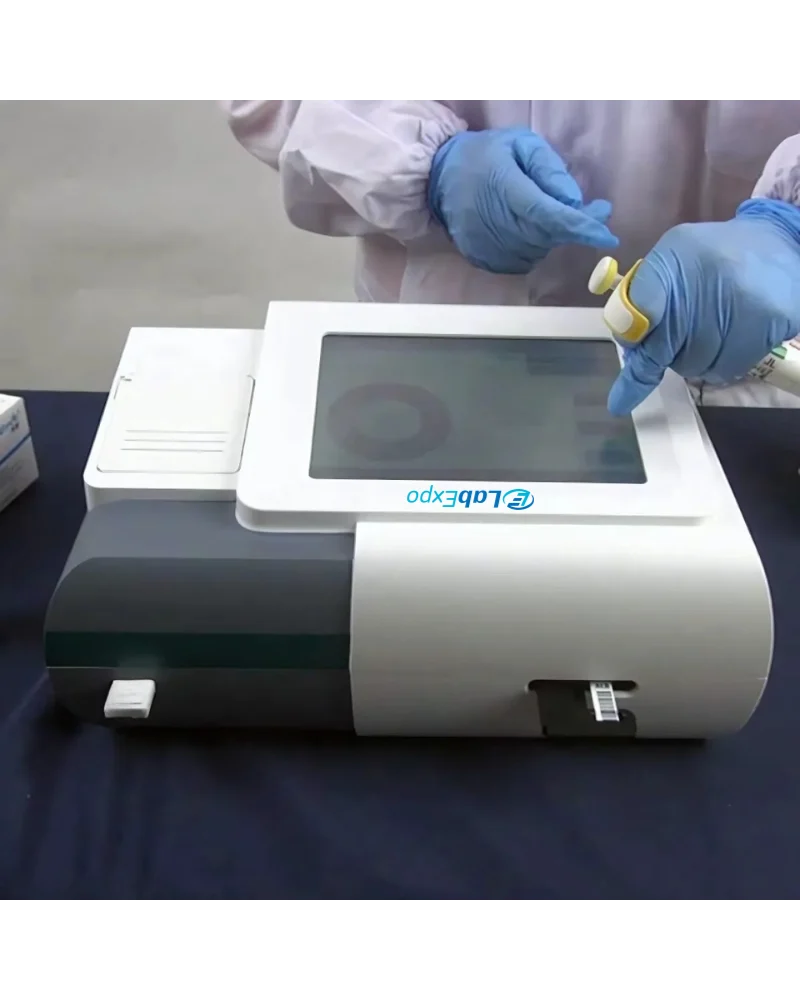
Electrochemical Sensor Arrays: Modern analysers like use electrochemical detection for a range of parameters like pH, pCO₂, pO₂, Na⁺, K⁺, Ca²⁺, Cl⁻, glucose, and lactate. Each sensor is optimized with Ion-selective electrodes to directly measure hydrogen, oxygen, and carbon dioxide. Instrument’s Potentiometric sensors detect ion concentrations via selective membranes. Lab Expo’s Blood Gas Analyzer are equipped with Amperometric biosensors that convert enzymatic reactions into electrical signals to indicate levels of glucose and lactate. These sensor fusions deliver comprehensive, rapid insights from a 80 to 120 µL blood sample.
Cartridge & Microfluidics Design: Blood Gas Analyzer employs a cartridge-based fluidic system that avoids the regular maintenance. No external gas tanks are needed in the system as advanced Blood Gas Analyzer fitted with waste reservoirs. The Automatic calibration routines run continuously or per sample to sustain accuracy and the minimal dead space microchannels ensure fast flow and cleanup, that enable the operation in around 30 to 90 seconds.
Quality Control & Calibration: Reliability is key for the system that deals with human health. An efficient Blood Gas Analyzer fitted with multilevel QC systems like electronic controls; liquid QC cartridges detect sensor and automatic calibrations to regularly refresh sensors via internal fluids. Real-time monitoring of sensor performance ensures clinical-grade precision.
Advanced Integrated Computing: The tool features intelligent internal systems that is a remarkable precision. At their core, the embedded microcontrollers manage real-time control of sensors, filter raw signals, and perform fast result processing. Another standout feature is temperature compensation by which the analyser actively adjusts for both blood and room temperature to ensure consistently accurate readings, even in changing environments. These systems also go beyond just basic readings. The software automatically calculates key derived parameters like bicarbonate (HCO₃⁻), base excess, oxygen saturation (SpO₂), anion gap, and various respiratory function indices resulting a complete view of the patient’s acid-base and oxygenation status in seconds.
Final Thoughts
Blood Gas Analyzer are leading healthcare tool. As medical science is continuously evolving, Using the analyser is a commitment to precision medicine and better patient care. By blending advanced sensor technology, automated calibration, and intelligent data integration, these systems empower doctors and healthcare professionals to deliver faster, more accurate, and intensive patient care. Whether it's managing critical emergencies in the ICU or working in a central lab, the reliability of modern Blood Gas Analysis can efficiently improve results. Blood Gas Analyzer are leading healthcare tool. As medical science is continuously evolving, Using the analyser is a commitment to precision medicine and better patient care. By blending advanced sensor technology, automated calibration, and intelligent data integration, these systems empower doctors and healthcare professionals to deliver faster, more accurate, and intensive patient care. Whether it's managing critical emergencies in the ICU or working in a central lab, the reliability of modern Blood Gas Analysis can efficiently improve results.
How Lab Expo Can Help
At Lab Expo, we understand the critical role of Blood Gas Analyzer in saving lives and supporting clinical decision-making. That is why we offer high-technology solutions with-
Minimum Sample Volume Requirement- Only 150 μL of blood is needed, minimizing patient discomfort while ensuring reliable analysis.
Precise Measurement Technology- Utilizes advanced dry electrochemistry combined with a microfluidic system for precise, low-maintenance testing.
Urgent Testing Time- Delivers accurate results within approximately 5 minutes (±1 minute), enabling timely decisions in urgent care.
Optimal Operating Temperature- Performs best in environments ranging from 10°C to 30°C, suitable for standard lab and clinical conditions.
Better Cartridge Shelf Life- Test cartridges remain stable for 8 months at room temperature, allowing convenient planning.
Hematocrit Compatibility- Lab Expo Blood Gas Analyzer supports HCT levels from 10% to 65% for glucose testing and for lactate testing it is from 30% to 60%
offering advanced instruments, Lab Expo ensures your lab or healthcare facility runs efficiently without interruption.