

Abstract
The health of cell culture depends on maintaining constant CO2 levels in incubators, yet even small variations can change pH, slow growth, and create uncertainty in experiments. In order to maintain precise environmental conditions and stable gas exchange, modern incubators use closed-loop management, high-efficiency heating systems, sophisticated CO2 sensors, and warning mechanisms. This article examines the biological and technical justifications for the significance of CO2, outlines design techniques for preserving its stability, and demonstrates how features like tight chamber sealing, dual-sensor redundancy, and real-time monitoring, guarantee reliable consistent culture conditions.
Introduction
From stem cells to biopharmaceutical production lines, cell culture systems require a well calibrated environment. Through the bicarbonate buffer system, CO2 has a special function in preserving physiological pH among all the variables – temperature, humidity, and O2 concentration. Even a 0.2 to 0.3% disturbance in the CO2 balance can cause a 0.1unit pH shift. Such slight pH drift eventually results in changed cell activity, weakened protein expression, and uneven experiment results. Because downstream operations involve so many variables, CO2 instability may be the unseen bottleneck compromising reproducibility and possibly compromising the quality of publications. To mitigate this, incubator design teams focus on robust control strategies and sensor technologies to maintain equilibrium.
Content
Technologies That Safeguard CO2 Stability in Modern Incubators
Advanced CO2 Sensing for Real-Time Control
Infrared (IR) CO2 sensors are used in modern incubators to continuously check the amounts of gas in the chamber. The gas control system receives data from these calibrated sensors, which are able to precisely detect variations in CO2 partial pressure. High-end systems now use dual sensor redundancy, in which a backup sensor confirms the primary sensor’s reading, to further minimize mistake. This cross-validation make sure that gas regulation is not jeopardized by sensor drift or failure.
Dynamic Gas Injection and Flow Regulation
Incubators must promptly return to equilibrium when CO2 levels fall as a result of repeated door openings or chamber enlargement. Proportional gas control systems, which adjust gas flow in response to sensor data, are used to accomplish this. By making real-time adjustments, these systems can avoid under – or – over – saturation. In well-designed incubators, precision control valves and microprocessor-based regulation are increasingly commonplace, guaranteeing that CO2 levels stay within ±0.1% of the set point.
Humidity Control to Stabilize Gas and pH Balance
In addition to altering osmolality, evaporation from the culture media also has an indirect impact on the buffering capacity of CO2. Relative humidity must be kept above 90% in order to minimize evaporation and stabilize the interaction of CO2 with the bicarbonate buffer system. To keep the incubator chamber at the ideal moisture level, clever humidification sensors, vapor generators, and water pans are frequently utilized.
Chamber Design That Minimizes CO2 Loss
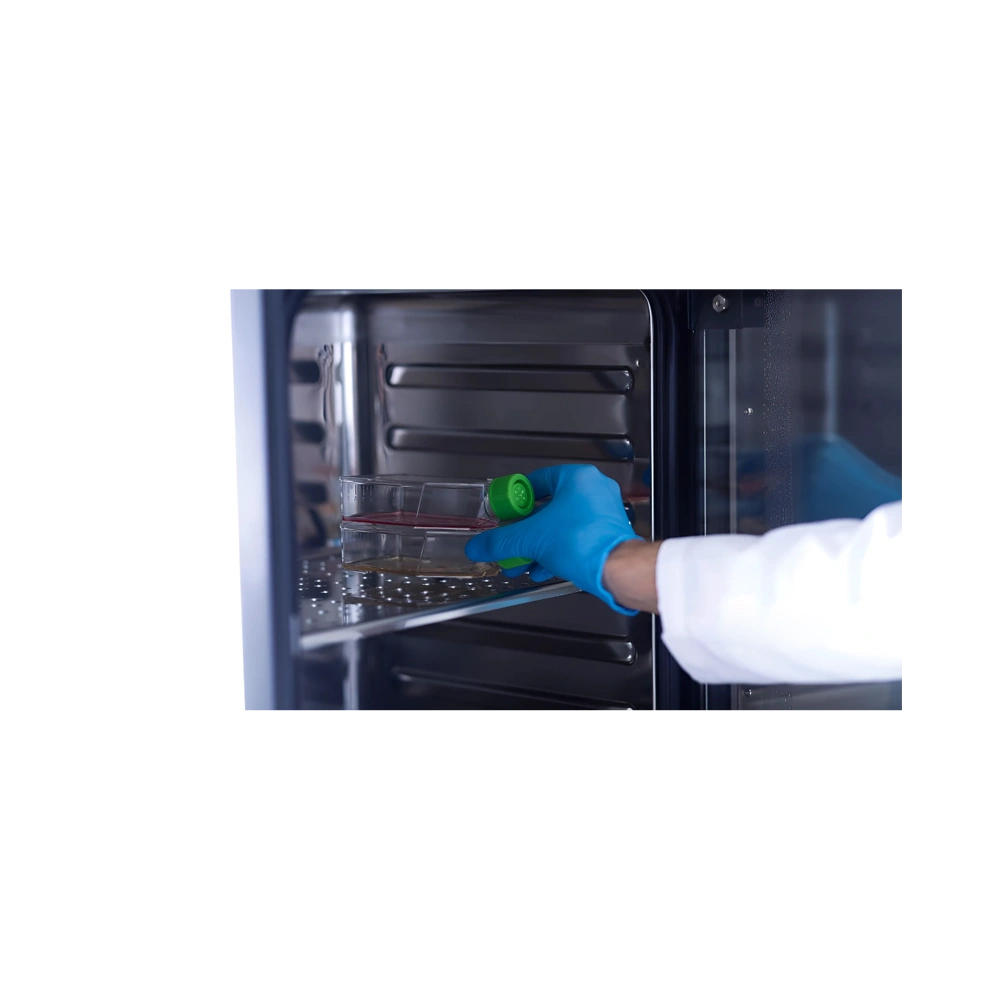
A burst of ambient air enters the compartment with each door opening. Incubators are currently built with:
Tight door sealing
Several inner glass doors or chambers to speed up recovery
Smoother routes for air circulation
A smaller chamber volume
These characteristics enable the incubator to return to stable conditions in a matter of minutes and reduce CO2 dilution.
Monitoring, Alarms, and Data Logging
Smart CO2 incubators include visual and auditory alerts that sound when CO2 level go outside of the permissible limit. Gas levels are monitored over time by integrated data loggers, which assist users in identifying patterns or diagnose problems before they affect cultures.
Final Thoughts
One of the most neglected yet biologically crucial factor in preserving healthy, repeatable cell cultures is CO2 stability. Variations in CO2 levels can change the pH of the media, stress cells and ultimately jeopardizing the reliability of scientific findings. Reliability in results is directly correlated with accuracy in gas control, whether you are growing delicate stem cells or conducting long-term tests. The need for strict environmental control will only increase because to the growing use of automation, high-throughput systems, and complicated co-cultures. Maintaining your work, data, and timetable is just as important as performance when you invest in a well-designed incubator.
How Lab Expo Can Help
Lab Expo’s cell culture incubators are designed to satisfy the demanding requirements of modern bioscience labs. Each model includes features that put biological integrity and gas stability first.
Lab Expo offers:
Precise temperature and CO2 control through digital regulation systems
Built-in air circulation for uniform distribution of environmental parameters
Rapid recovery mechanisms that minimize disruption after door openings
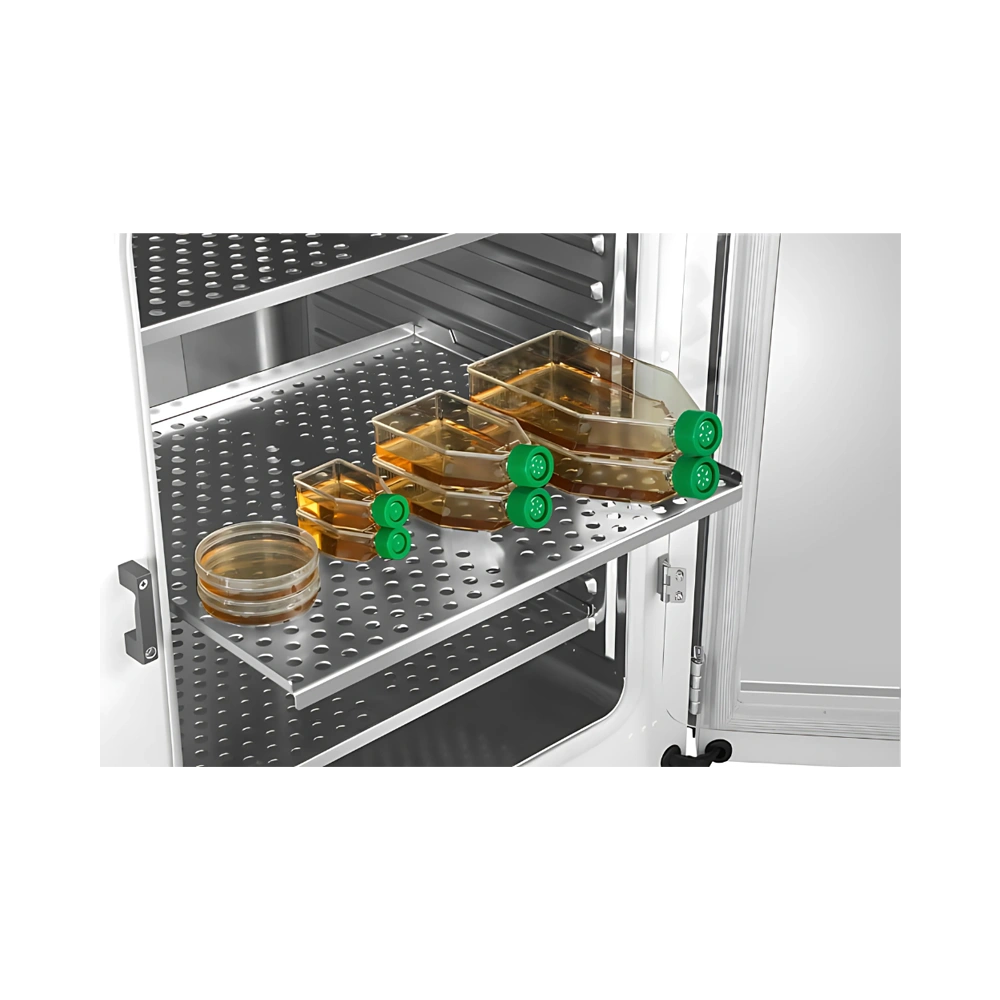
Durable stainless-steel interiors with detachable pallets for easy cleaning
Touchscreen interface for intuitive monitoring and adjustment
Over-temperature protection and integrated sterilization technology for safe operation.
Whether for research, pharmaceutical development, or clinical applications, Lab Expo’s Cell Culture Incubator delivers consistent CO2 control that safeguards cell health and improves reproducibility across experiments.