Request Quote
Scan the QR code below to connect with us on WhatsApp.

Request Quote
Scan the QR code below to connect with us on WhatsApp.
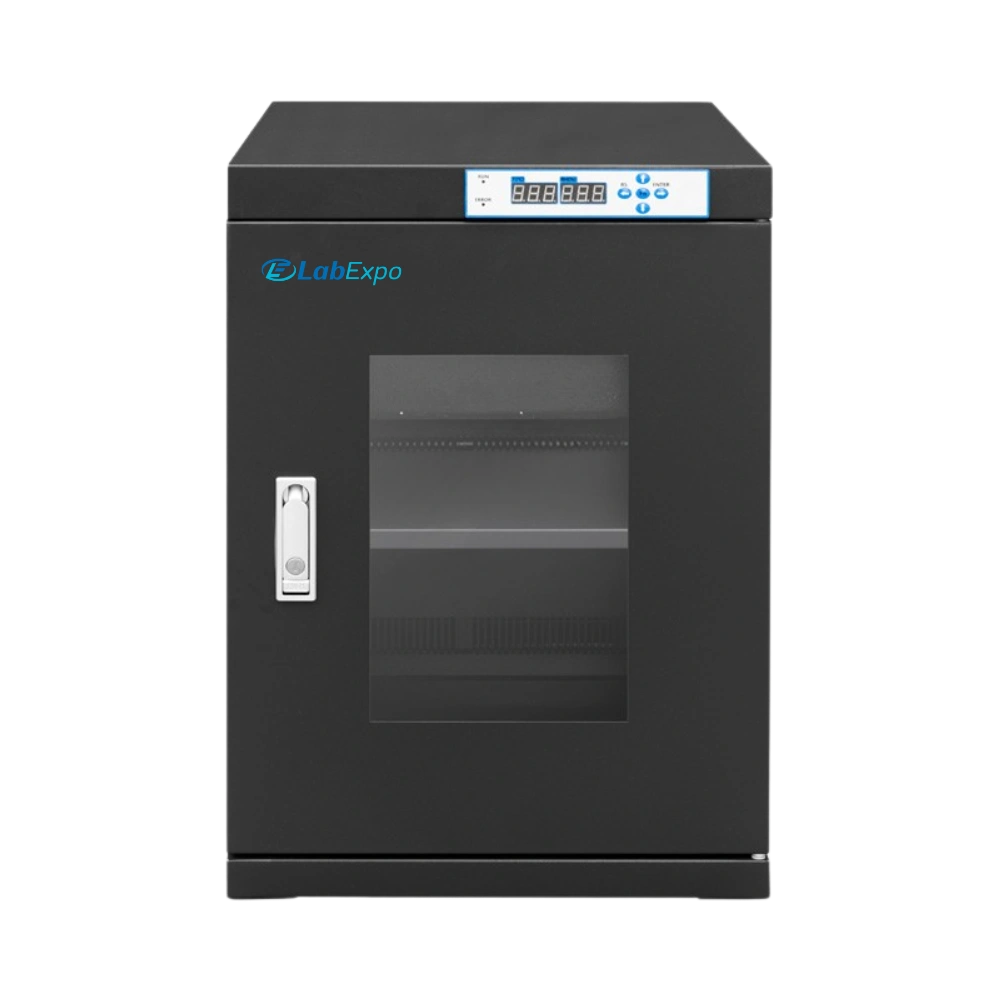
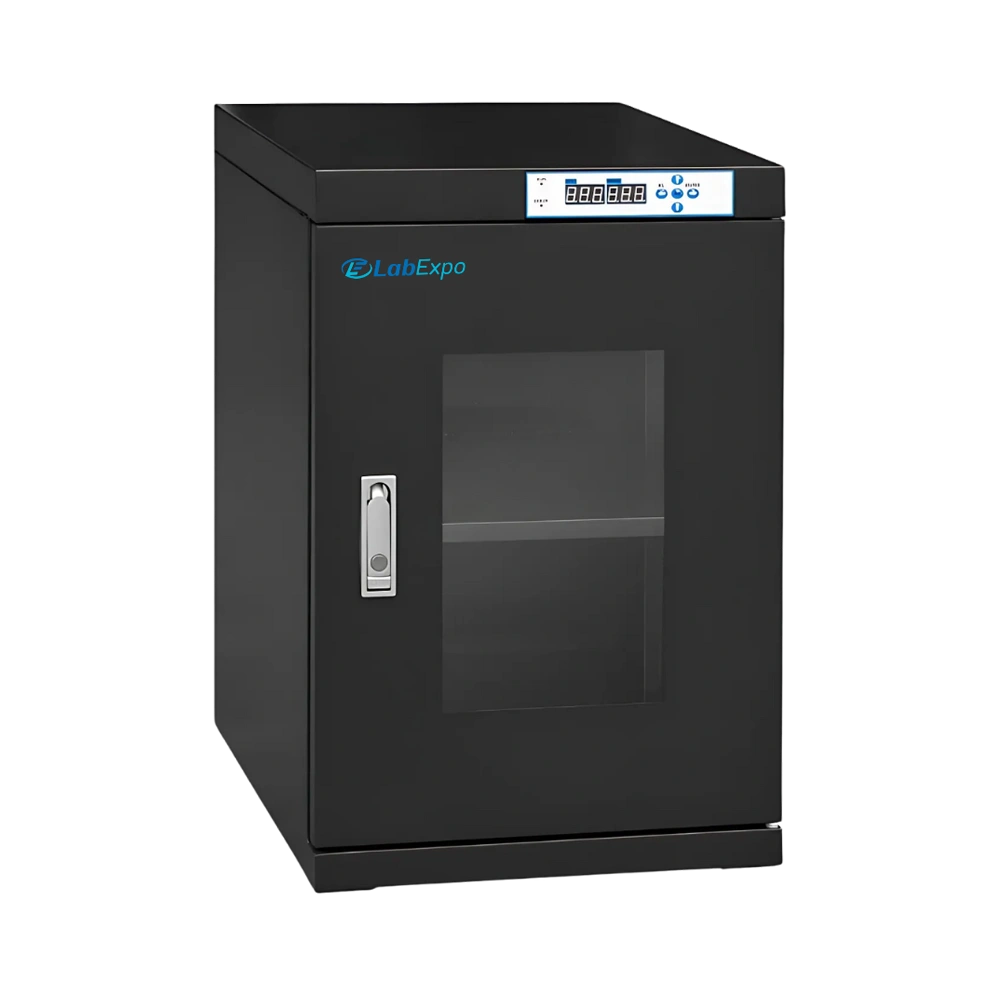

Dry Cabinet LE-DC303 is an ESD safe solution crafted for compact storage with a capacity of 98L. Built-in imported sensors maintains a low humidity range of 10% to 20% RH. Integrated dustproof and anti-static construction ensures stable internal conditions. Incorporated LED controller allows real-time monitoring with calibration reminder. Our Dry Cabinet is ideal for preserving electronic components, automotive parts, aerospace, and SMT.
Specifications
| Capacity | 98L |
| Humidity | 10% to 20% RH |
| ESD Type | Yes |
| Recovery Time | Maximum 30 min After Open Door 30 Seconds Then Closed |
| Ambient Temperature | 25℃ |
| No of Shelves | 1 |
| Maximum Load per Shelf | 50 Kg |
| Power Consumption | 6W |
| Interior Dimension | 446 × 372 × 598mm |
| Exterior Dimension | 448 × 400 × 688mm |
| Net Weight | 20 Kg |
| Gross Weight | 31 Kg |
Features
Applications
Function Implementation SMT component storage 10–20% RH environment preventing moisture absorption before assembly Automotive electronics preservation Stable low-humidity chamber reducing corrosion risk Aerospace part protection Controlled ultra-dry storage for precision materials PCB and IC handling Static-safe cabinet maintaining consistent internal conditions Research and QA use Real-time monitored humidity with ≤30 min recovery
Catalog
1: What makes this cabinet suitable for sensitive electronic parts?
These cabinets maintain a stable humidity of 10% to 20% RH and provide full ESD safety, ensuring reliable protection for static-sensitive devices.
2: How accurate is the monitoring system?
Their imported sensors deliver precise readings, while the LED controller with calibration reminder guarantees accurate real-time humidity tracking.
3: Can this unit handle heavy storage despite its compact size?
Yes, they are designed with a shelf capacity of up to 50 kg, allowing secure placement of moderately heavy components.
4: How does the cabinet prevent contamination?
It is built with dustproof construction and anti-static materials, keeping the internal environment clean and stable.
5: Why is this cabinet beneficial for specialized industries?
Our Dry Cabinet combines large capacity, ESD safety, durable construction, and energy-efficient performance, making it a dependable solution for critical storage needs.
6: What is a Dry Cabinet and what is it used for?
A Dry Cabinet is a storage unit designed to maintain a low-humidity environment, ideal for preserving moisture-sensitive items such as laboratory samples.
7: How does a Dry Cabinet maintain precise relative humidity levels?
Dry Cabinets use advanced desiccant or dehumidification systems to absorb and remove moisture from the internal environment. These systems are controlled by digital sensors and microprocessors that constantly monitor and adjust RH levels.
8: How does the memory function improve operational ease?
It eliminates the need for manual reprogramming by automatically restoring previous settings when the cabinet is restarted, saving time and reducing human error.
9: What role do integrated sensors play in a Dry Cabinet?
Integrated sensors monitor environmental parameters such as relative humidity and temperature in real time, allowing the system to maintain optimal storage conditions for moisture-sensitive items.
10: Do these systems work in varying ambient conditions?
Yes, advanced dehumidification systems are designed to adapt to ambient temperature and humidity changes, maintaining internal relative humidity stability regardless of external fluctuations.
Lab Expo Dry Cabinet supports controlled low-humidity storage where moisture protection is critical for sensitive components and materials. This cabinet dry system operates with regulated dehumidification to maintain defined RH levels and prevent moisture-related degradation. High-sensitivity sensors provide real-time condition monitoring, while digital controls with memory functions ensure consistent settings. Robust sealing and durable build support uniform humidity control and stable, repeatable storage performance for continuous technical use.
