Request Quote
Scan the QR code below to connect with us on WhatsApp.

Request Quote
Scan the QR code below to connect with us on WhatsApp.
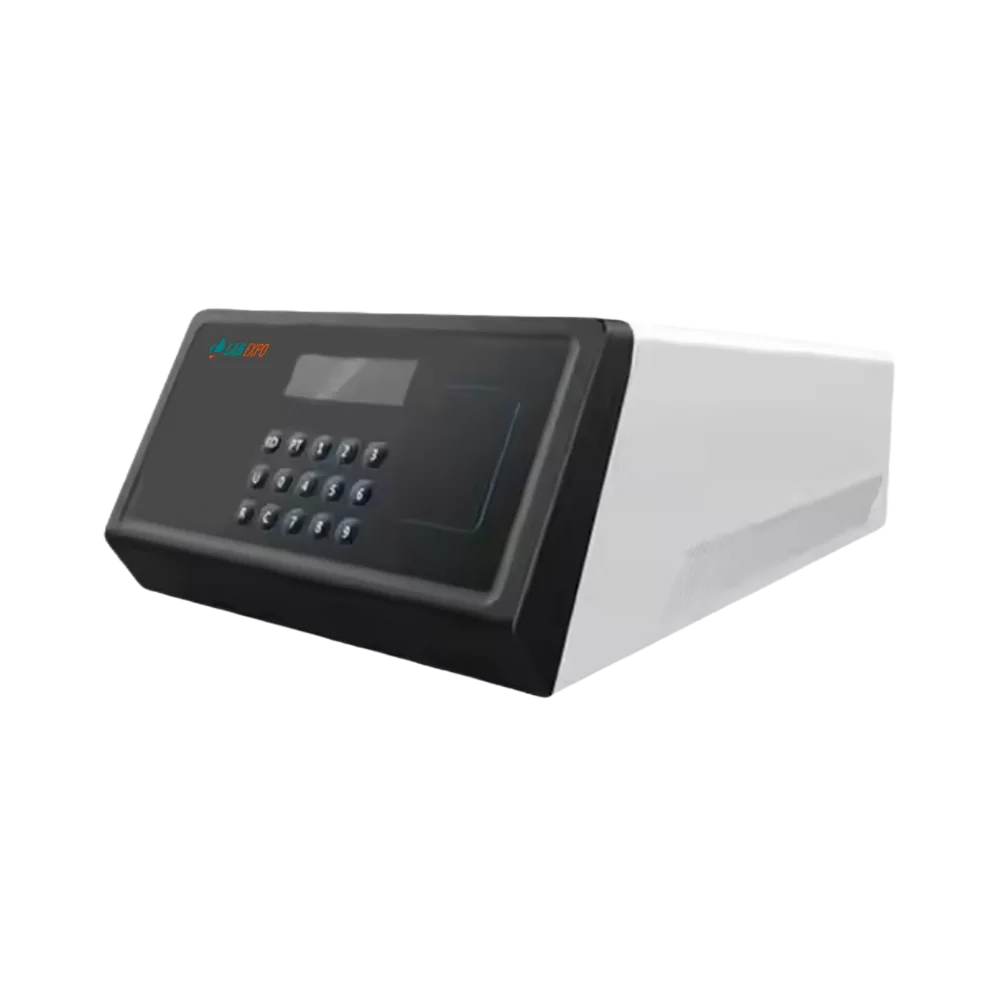
Gene Electroporator 01A-GEP100 offers a high output voltage range from 400 to 2500 V and a low output voltage range from 100 to 450 V. It features a user-friendly interface and can transfect a large number of cells quickly. This device produces an exponential waveform output to optimize the electroporation process. Our gene electroporator is equipped with safety features to protect the operator and samples.
Specifications
| High Output Voltage | 400 to 2500 V |
| Low Output Voltage | 100 to 450 V |
| High Voltage Capacitor | 1, 5, 6, 25, 30, 31 µF |
| Low Voltage Capacitor | 100 µF,125 µF,150 µF….1675 µF, one grades of 25 µF |
| Resistance | 50 Ω, 100 Ω, 150 Ω, 1600 Ω, increment total 30 grades |
| Output Waveform | With the RC time constant of the exponential decay of wave |
| Dimension | 368 × 316 × 229 mm |
| Packaging Dimension | 480 × 420 × 280 mm |
| Weight | 10.5 kg |
| Weight | 10.5 kg |
Features
Applications
Function Implementation Cell Transfection 400 to 2500 V high output voltage enables efficient cell penetration Gene Silencing 100 to 450 V low output voltage supports subtle gene regulation Molecular Biology 50 Ω to 1600 Ω resistance range facilitates diverse experimental designs Cell Hybridization Exponential waveform output optimizes cell fusion processes Laboratory Research 1 to 31 µF high voltage capacitor range allows for flexible protocol development
Lab Expo Gene Electroporators support electroporation workflows where controlled electrical pulsing is required to enable temporary membrane permeabilization for efficient gene transfer and cell hybridization studies. The system operates with digitally regulated pulse parameters to maintain repeatable transfection conditions across varied cell types. User-controlled interfaces manage voltage and timing, while stable build and monitored operation ensure consistent outcomes for routine molecular biology and cell research applications.
