Request Quote
Scan the QR code below to connect with us on WhatsApp.

Request Quote
Scan the QR code below to connect with us on WhatsApp.
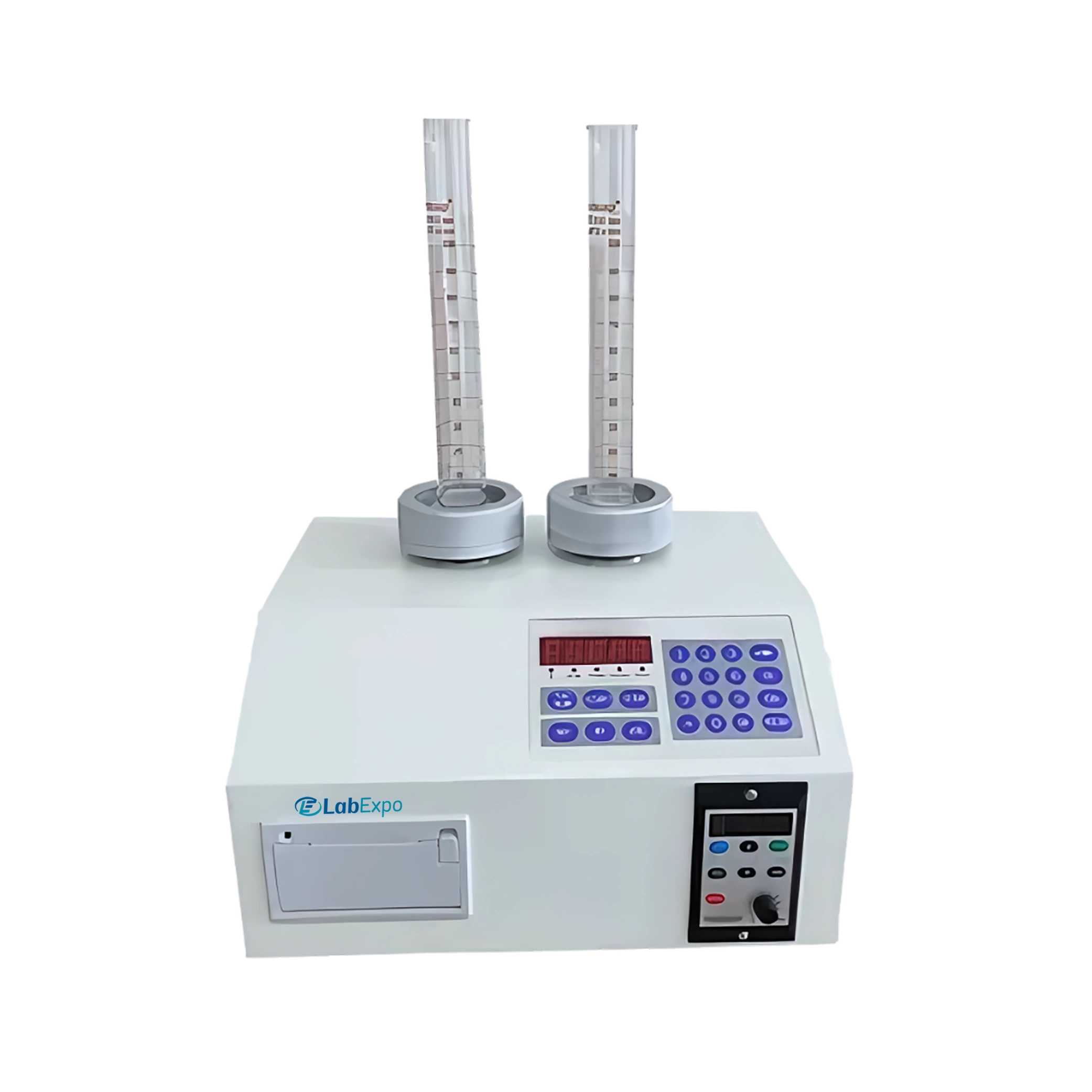
Tap Density Tester LE-TDT102 is designed for precise powder density measurement with an adjustable drop height. It features a user-friendly interface and automatic data recording for consistent and reliable test results. Integrated measuring cylinders of various sizes support flexible testing and easy adjustment of tapping parameters. Built-in printer delivers reports showing sample weight, volume, tap count, and calculated tap density values. Our Tap Density Tester is suitable for laboratory environments, with a coated body that resists powders and simplifies cleaning.
Specifications
| Work Station | 2 |
| Test Sample Weight | ≤ 500g |
| Test Sample Volume | ≤ 250ml |
| Single Vibration Times | ≤ 0 to 99999 times |
| Allowable Torque of the Motor | 0.86 Nm |
| Vibration Frequency | 0 to 300 R/Min |
| Amplitude of the Vibration | Max.- 15mm, Integer 1 to 15mm (Adjustable) |
| Repeatability Error | ≤ 1% |
| Accuracy Error | ≤ 1% |
| Power Consumption | 40W |
| Power Supply | 220V, 50/60Hz |
| Dimension | 440 × 320 × 350 mm |
| Net Weight | 16 Kg |
| Gross Weight | 18.1 Kg |
Features
Applications
Function Implementation Research labs 40W power consumption enables continuous operation Quality control ≤ 1% accuracy error supports precise density measurement Industrial testing 0 to 300 R/Min vibration frequency allows for flexible testing Clinical environments ≤ 500g test sample weight enables handling of small samples Pharmaceutical facilities 220V, 50/60Hz power supply supports standard laboratory conditions
Standard Accessories
Measuring cylinder × 3 pieces
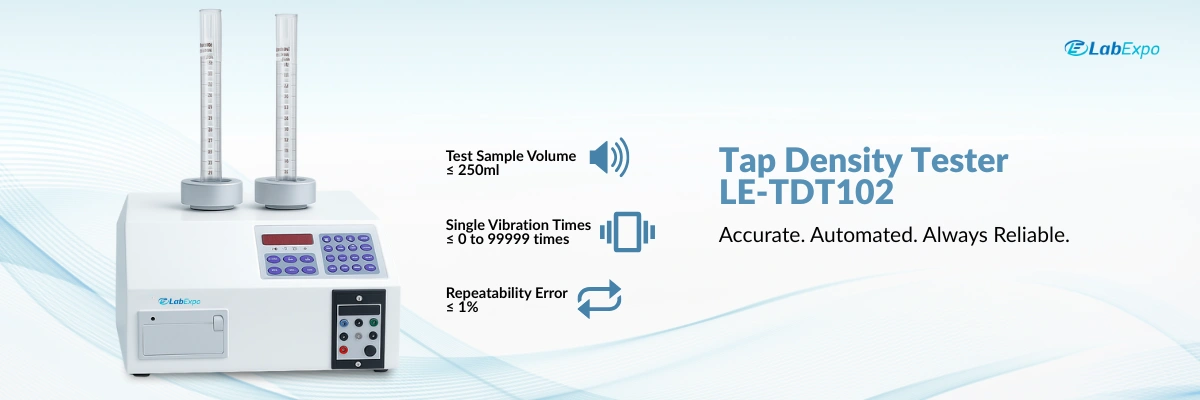

Lab Expo Tap Density Testers support controlled bulk density evaluation where repeatable tapping and accurate volume measurement are required for powder and granular material analysis. This tap density apparatus operates with automated tapping cycles and digitally regulated control to maintain consistent test conditions. Touchscreen operation manages test parameters and data logging, while stable mechanical build ensures repeatable density results for quality control, material characterization, and routine laboratory testing.
