Request Quote
Scan the QR code below to connect with us on WhatsApp.

Request Quote
Scan the QR code below to connect with us on WhatsApp.
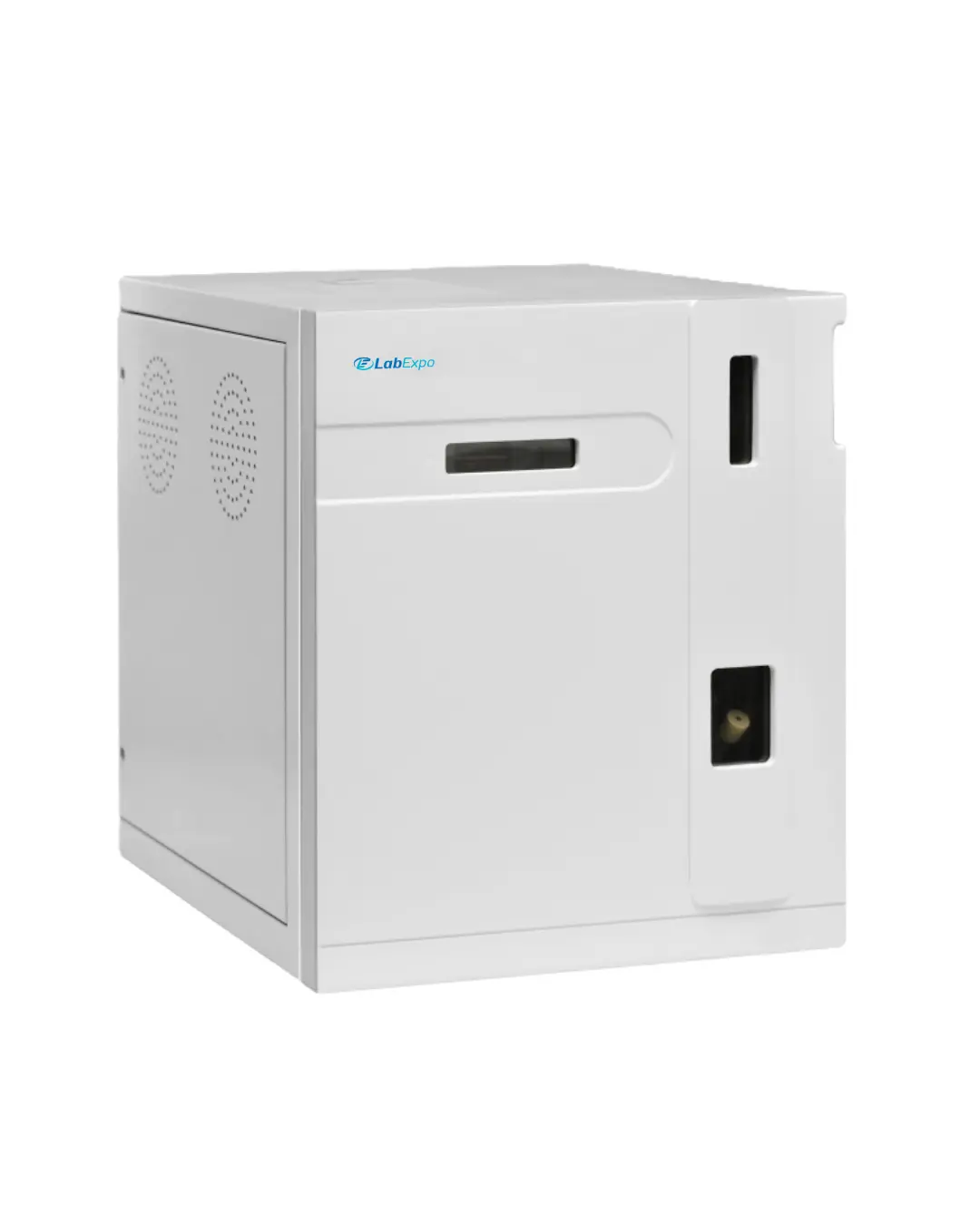
TOC Analyzer LE-TOC101 offers a wide measurement range from 0 to 10,000 mg/L (ppm) to enable accurate detection. It can handle samples with salinity levels up to 85 g/L. Supports multiple analysis parameters including TC, TIC, TOC, and NPOC. Equipped with a NDIR detector to ensure high-sensitivity and reliable carbon detection. Our TOC Analyzer is a reliable solution for high-precision carbon analysis.
Specifications
| Measurement Range | 0 to 10,000 mg/L (ppm) |
| Detection Limit | 5 µg/L (ppb) |
| Repeatability | 3% |
| Maximum Salinity | 85 g/L |
| Measurement Method | Wet Chemical Oxidation by UV |
| Detector | NDIR (Non-Dispersive Infrared) |
| Analysis Parameters | TC, TIC, TOC, NPOC |
| Gas Requirement | Nitrogen, purity ≥ 99.995% |
| Control Mode | PC Control |
| Power Consumption | 200 W |
| Power Supply | AC110/220V, 50/60 Hz |
| Dimension | 430 × 455 × 440 mm |
Features
Applications
TOC Analyzer LE-TOC101 is ideal for monitoring total organic carbon in applications such as environmental water testing, pharmaceutical manufacturing, industrial wastewater treatment, and research laboratories requiring precise carbon analysis in liquid samples.
Optional Accessories
Autosampler (Liquid)
Catalog
1: What is the measuring range of the TOC Analyzer LE-TOC101?
It offers a wide measurement range from 0 to 10,000 mg/L (ppm), making it suitable for a variety of carbon concentration levels in liquid samples.
2: What types of carbon can the analyzer measure?
It supports multiple analysis parameters, including Total Carbon (TC), Inorganic Carbon (TIC), Total Organic Carbon (TOC), and Non-Purgeable Organic Carbon (NPOC).
3: What is the maximum salinity it can handle?
It can analyze samples with salinity levels up to 85 g/L, making it ideal for marine, brine, and industrial wastewater samples.
4: What is the measurement method and detector type used?
Our Analyzer uses Wet Chemical Oxidation by UV and is equipped with a Non-Dispersive Infrared (NDIR) detector for high-accuracy carbon detection.
5: What kind of control interface does it use?
The instrument is controlled via a PC-based control mode, allowing easy data handling and automation.
6: What enables the TOC Analyzer to accurately measure carbon in both liquid and gas samples?
The analyzer uses advanced oxidation techniques and sensitive detectors to ensure accurate carbon measurement in both liquid and gas phases, across a wide concentration range.
7: What role does the computer-aided system play in TOC analysis?
The computer-aided system automates key functions such as data processing, calibration, sample handling and result interpretation to ensure precise carbon measurement.
8: What is wet chemical oxidation in TOC analysis?
Wet chemical oxidation involves the use of UV light and chemical oxidants, such as persulfate, to break down organic carbon into measurable CO? for detection.
9: Does the analyzer support real-time TOC measurement?
Yes, the analyzer provides real-time TOC monitoring, enabling continuous tracking of carbon levels for immediate process feedback and control.
10: Why is a leakage prevention mechanism important in TOC Analyzers?
Leakage can lead to inaccurate readings, contamination of samples, instrument damage and safety hazards. An automatic system minimizes these risks by responding in real time.
Lab Expo offers TOC Analyzer with a broad measurement range and a high level of sensitivity to detect even trace amounts of carbon. It ensures accurate analysis by capturing a wide spectrum of carbon concentrations in liquid and gas samples. It features an advanced computer-aided system to determine carbon content in both liquid and gas samples. It operates using a wet chemical oxidation mode and employs precision detecting levels. Our analyzer offers real-time measurement, flexible temperature settings for various sample types, and an automatic leakage prevention mechanism.
