Request Quote
Scan the QR code below to connect with us on WhatsApp.

Request Quote
Scan the QR code below to connect with us on WhatsApp.
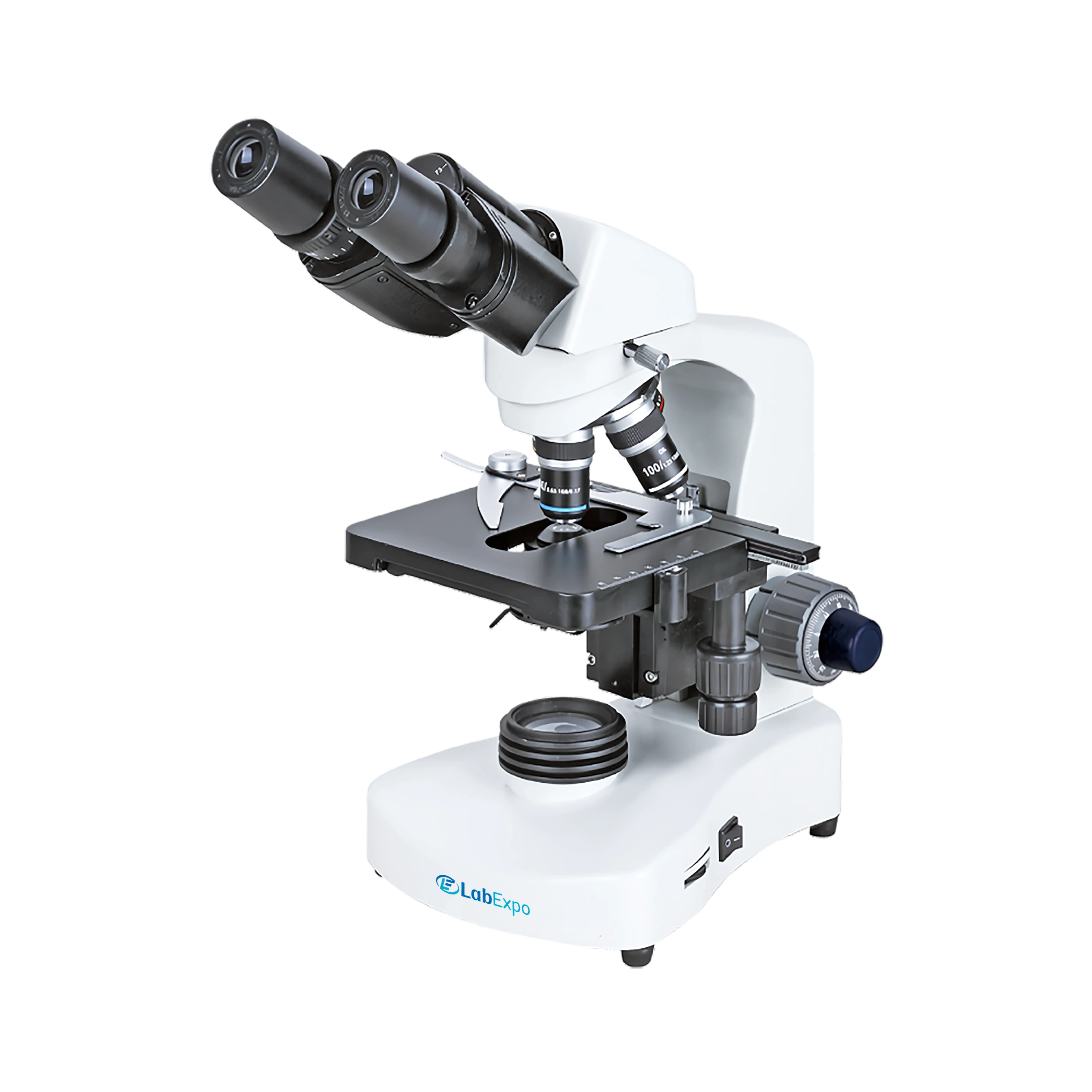
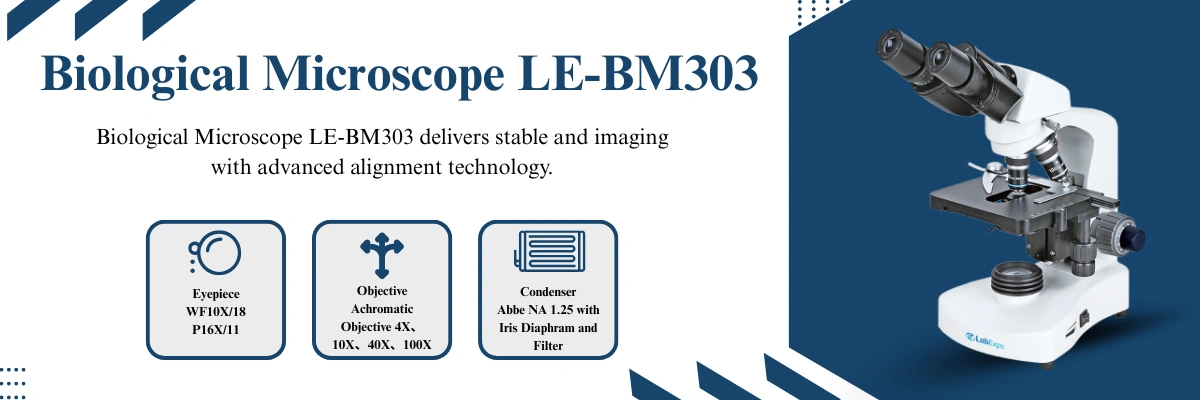
Biological Microscope LE-BM303 delivers stable and imaging with advanced alignment technology. Equipped with a binocular viewing head for enhanced visual comfort and accuracy. Integrated optical components ensure clarity and consistency during observation. Incorporated ergonomic design provides comfortable and efficient user experience. Our Biological Microscope is suitable for clinical diagnostics, education, and laboratory research applications.
Specifications
| Viewing Head | Hinged type Binocular Head, Inclined at 30°, Interpupilary Distance 48-75mm |
| Eyepiece | WF10X/18 P16X/11 |
| Objective | Achromatic Objective 4X、10X、40X、100X |
| Nosepiece | Backward Quadruple Nosepiece |
| Stage | Double Layer Mechanical Stage 132X142mm/ 75X40mm |
| Focusing | Coaxial Coarse and Fine Adjustment, Fine Division 0.004mm, Coarse Stroke 32.7mm per Rotation, Fine Stroke 0.4mm per Rotation, Moving Range 24mm |
| Condenser | Abbe NA 1.25 with Iris Diaphram and Filter |
| Illumination | S-LED Illumination, Brightness Adjustable Halogen Lamp 6V/ 20W, Brightness Adjustable |
Features
Applications
Biological Microscope LE-BM303 is suitable for clinical diagnostics, education, and laboratory research applications.

Lab Expo provides a wide range of biological microscopes designed for observing cells, tissues, and other biological specimens. They feature multiple lenses that offer magnifications ranging from 4x to 100x. These include fully coated glass optics, enclosed safety stages, and high apertures. They are designed with comfortable binocular and trinocular viewing heads. They come with advanced features such as the Infinity Corrected Optical System (ICOS) and Plan achromatic optics. Our biological microscopes are ideal for brightfield and phase contrast observation modes.
