Request Quote
Scan the QR code below to connect with us on WhatsApp.

Request Quote
Scan the QR code below to connect with us on WhatsApp.

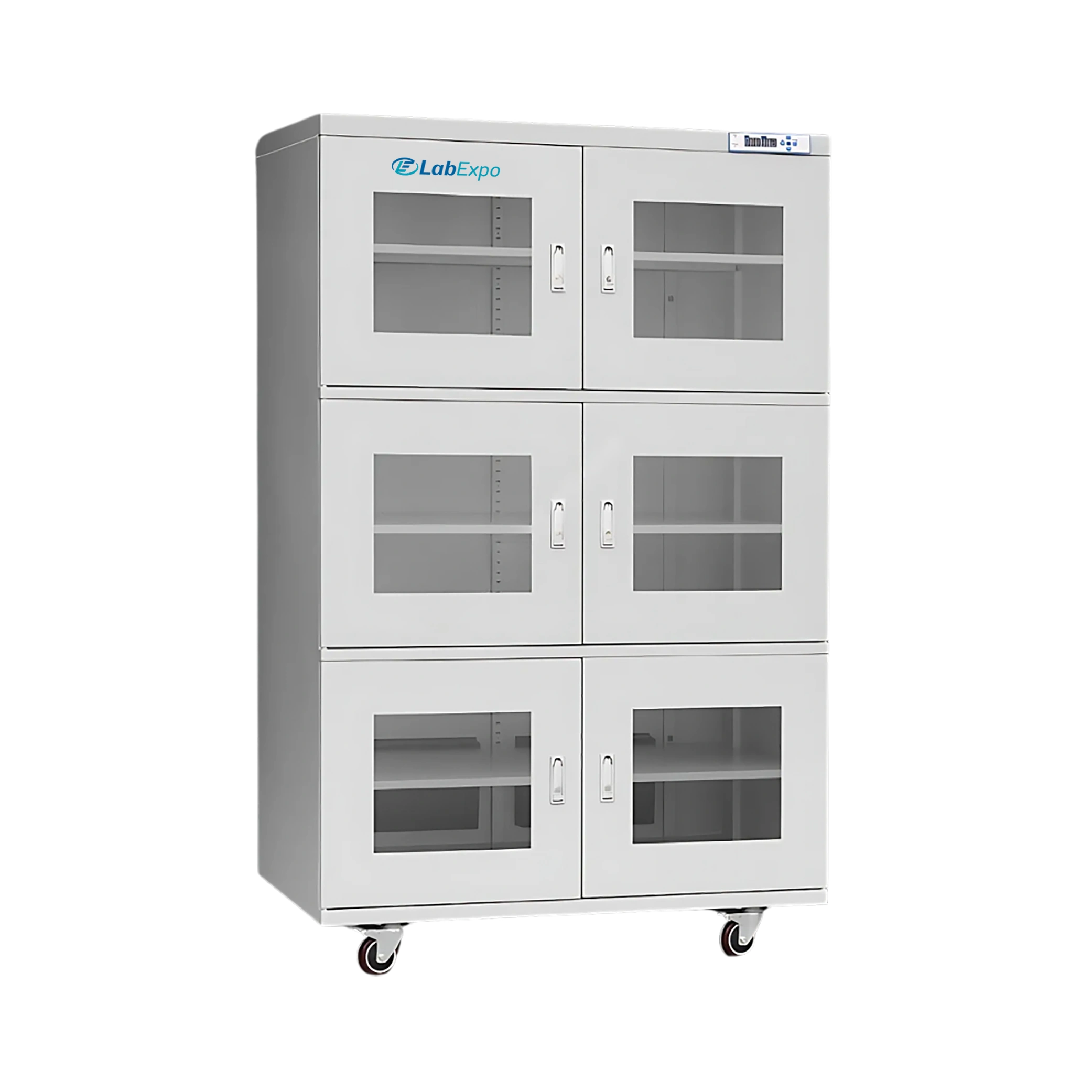
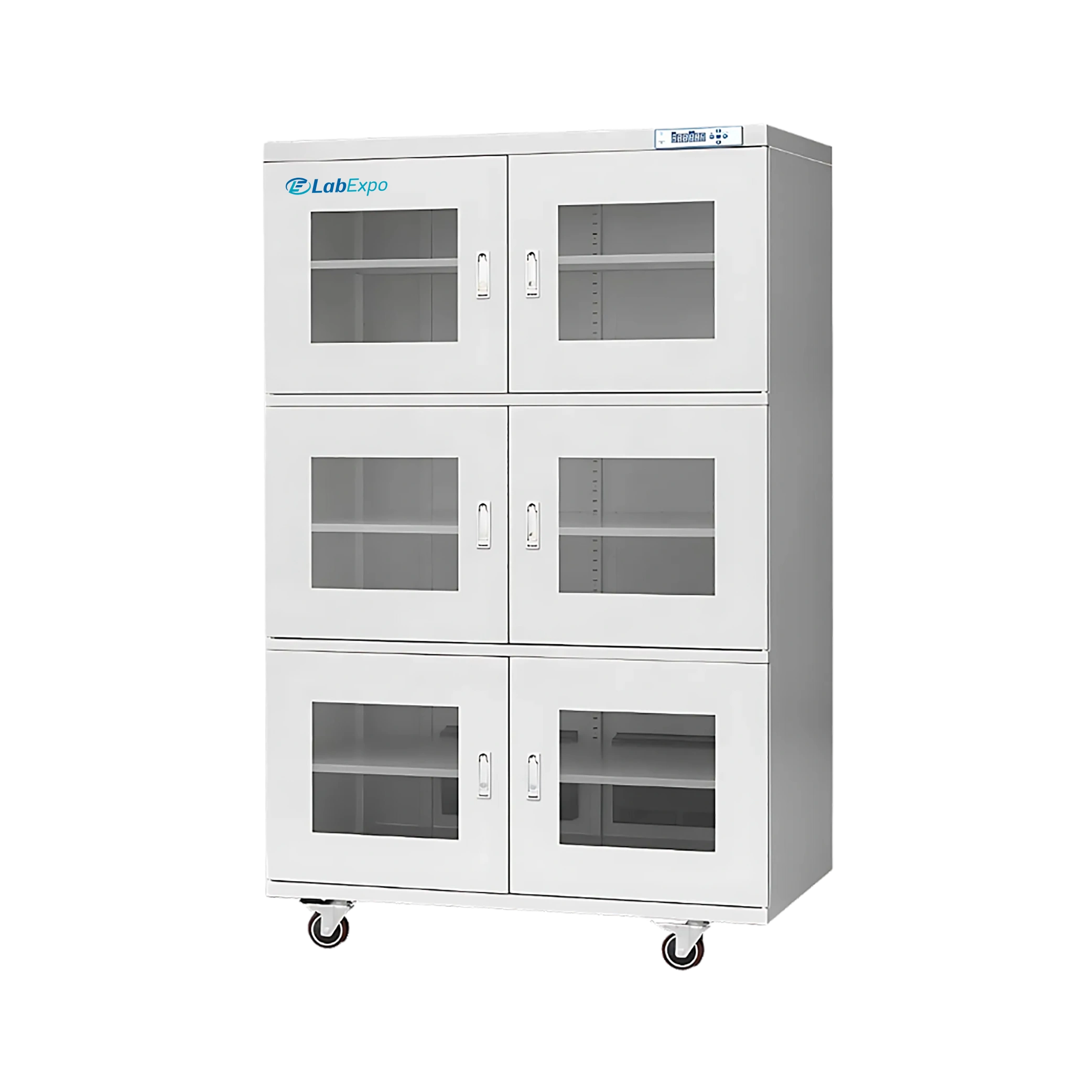
Dry Cabinet LE-DC203 provides high-capacity storage of 1436L with automatic humidity control below 10% RH. Equipped precise LED control system for real-time RH monitoring. Built-in memory function retains setting after power failure, ensuring uninterrupted operation. Incorporated with a 3.2mm high-intensity tempered glass window for easy observation. Our Dry Cabinet is suitable for electronics, semiconductors, optical devices, and other moisture-sensitive applications.
Specifications
| Capacity | 1436L |
| Humidity | Less Than 10% RH |
| Recovery Time | Maximum 30 min After Open Door 30 Seconds Then Closed |
| Ambient Temperature | 25℃ |
| No of Shelves | 5 |
| Maximum Load per Shelf | 100 Kg |
| Power Consumption | 20W |
| Interior Dimension | 1198 × 682 × 1723mm |
| Exterior Dimension | 1200 × 710 × 1910mm |
| Net Weight | 144 Kg |
| Gross Weight | 189 Kg |
Features
Applications
Function Implementation Bulk electronic storage <10% RH environment preventing moisture-related component failure Semiconductor device protection Stable ultra-dry chamber supporting precision manufacturing Optical equipment preservation Controlled humidity minimizing condensation and surface damage Industrial inventory management Large-capacity cabinet enabling organized sensitive storage Research and production continuity ≤30 min humidity recovery with automatic setting retention
Catalog
1: How do these cabinets help in storing bulk components?
These cabinets provide a 1436L large-capacity chamber, making them ideal for bulk storage of sensitive devices.
2: What ensures their long-term reliability?
Their durable galvanized steel construction and tempered glass window ensure strength and lasting performance.
3: How do they support continuous operations during power issues?
They retain humidity settings through a memory function, ensuring no reset is required after power interruptions.
4: What makes it efficient in humidity control?
It integrates an advanced LED control system for precise, real-time monitoring of RH levels.
5: Why is our cabinet suitable for advanced industries?
Our cabinet offers stable low-humidity storage, making it perfect for electronics, semiconductors, optical devices, and research applications.
6: What is a Dry Cabinet and what is it used for?
A Dry Cabinet is a storage unit designed to maintain a low-humidity environment, ideal for preserving moisture-sensitive items such as laboratory samples.
7: How does a Dry Cabinet maintain precise relative humidity levels?
Dry Cabinets use advanced desiccant or dehumidification systems to absorb and remove moisture from the internal environment. These systems are controlled by digital sensors and microprocessors that constantly monitor and adjust RH levels.
8: How does the memory function improve operational ease?
It eliminates the need for manual reprogramming by automatically restoring previous settings when the cabinet is restarted, saving time and reducing human error.
9: What role do integrated sensors play in a Dry Cabinet?
Integrated sensors monitor environmental parameters such as relative humidity and temperature in real time, allowing the system to maintain optimal storage conditions for moisture-sensitive items.
10: Do these systems work in varying ambient conditions?
Yes, advanced dehumidification systems are designed to adapt to ambient temperature and humidity changes, maintaining internal relative humidity stability regardless of external fluctuations.
Lab Expo Dry Cabinet supports controlled low-humidity storage where moisture protection is critical for sensitive components and materials. This cabinet dry system operates with regulated dehumidification to maintain defined RH levels and prevent moisture-related degradation. High-sensitivity sensors provide real-time condition monitoring, while digital controls with memory functions ensure consistent settings. Robust sealing and durable build support uniform humidity control and stable, repeatable storage performance for continuous technical use.
